LANDSCAPE LIGHTING DESIGN
2700K vs. 3000K: Choosing the Right Light for Your Arizona Home
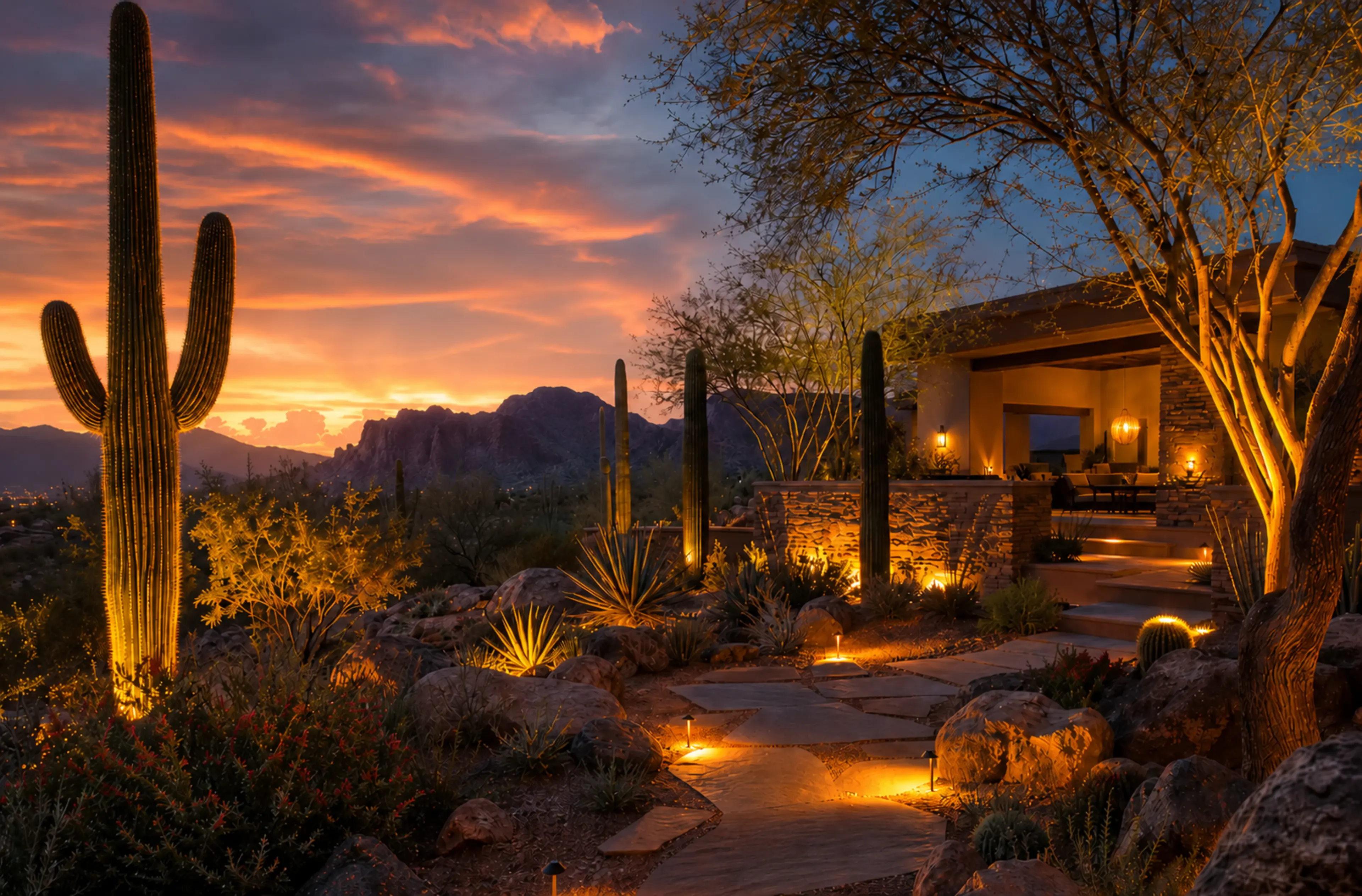
A small change in color temperature can completely change how stucco, stone, trees, and desert plants feel after sunset.
The short answer
For most Arizona homes, 2700K is the safest choice for a warm, refined residential look. It adds gentle amber warmth to stucco, stone, wood, and desert plant material. Choose 3000K when the architecture is distinctly modern or when you want slightly crisper definition without moving into a harsh blue-white appearance.
Color temperature should support the architecture—not call attention to the bulb.
What the numbers actually mean
Kelvin describes the visual warmth or coolness of white light. Lower numbers look warmer; higher numbers look cooler. The difference between 2700K and 3000K is subtle on a product box but obvious when an entire elevation is illuminated.
2700K: warm, relaxed, and natural
We favor 2700K for Spanish, Mediterranean, ranch, territorial, and transitional homes. It enriches warm stucco, wood doors, stacked stone, decomposed granite, and mature trees. Around patios and courtyards, it feels intimate rather than clinical.
3000K: clean warmth with more definition
3000K remains warm white, but it renders edges and neutral materials a little more crisply. It can work beautifully with contemporary architecture, gray stone, white stucco, concrete, steel, and simplified desert landscapes.
Why consistency matters in Phoenix landscapes
Mixing color temperatures randomly makes a property feel disconnected. One tree may appear golden while the adjacent wall looks blue-gray. A professional plan selects a dominant temperature and introduces a different tone only when a specific feature genuinely benefits.
Beam spread, fixture location, brightness, glare control, and aiming matter just as much as Kelvin. A well-aimed 2700K fixture can reveal texture and depth; a poorly aimed one can flatten the same wall.
Our recommendation
Start with 2700K. Walk the property after dark. If your architecture needs slightly cleaner contrast, test 3000K on the actual material before committing. A nighttime demonstration is more reliable than choosing from a daytime sample.
See it before we install it
Design your property after dark.
Every FARO project begins with your goals, your architecture, and a plan made specifically for the way you live outside.
Request a complimentary design ↗